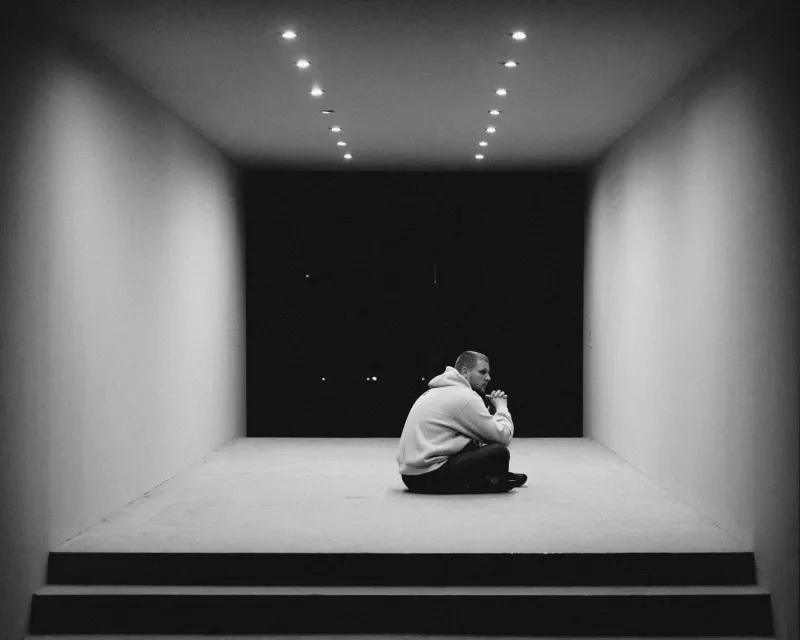
What You're Not Saying Is Saying Everything
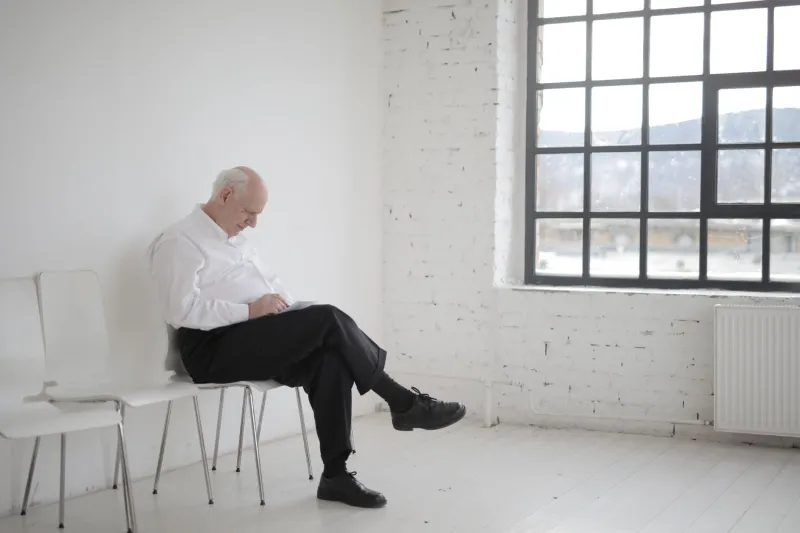
There's a particular kind of exhaustion that doesn't come from doing too much. It comes from carrying something unsaid for too long.
You know the feeling. The email you've drafted twelve times and never sent. The coworker situation you've been "keeping an eye on." The conversation with your partner that you've been waiting for the "right moment" to have — and somehow that moment has been four months away for the better part of a year.
We talk a lot about the weight of obligations, the clutter of commitments. But silence has its own mass. And unlike physical clutter, it doesn't just sit there. It compounds.
The Void You're Actually Creating
Here's the thing about avoidance: it feels like choosing nothing. Like opting out. Like a clean, zero-cost decision.
It isn't.
When you sidestep a hard conversation, you don't create a neutral space. You create a vacuum — and nature, as we all know, abhors a vacuum. Into that space flows assumption, projection, and story. Your brain fills in the blanks. So does theirs. By the time you actually have the conversation you've been avoiding, you're not just addressing the original issue. You're untangling months of accumulated narrative that neither of you consciously chose to build.
A study out of Harvard found that employees who avoided conflict with managers reported significantly higher levels of chronic stress than those who addressed issues directly — even when the direct conversations went poorly. The conversation itself wasn't the stressor. The anticipation, the delay, the low-grade dread of the thing unspoken — that was the cost.
Silence isn't free. It's just billed later.
The Professional Tab You're Running
Let's talk about work, because that's often where avoidance gets its most sophisticated disguise.
We dress it up in professionalism. I don't want to seem difficult. It's not the right time with everything going on. I'll bring it up after the next review cycle. These are reasonable-sounding justifications, and sometimes they're even true. But more often, they're the sophisticated vocabulary of a person who's afraid.
And the professional cost is real. Research consistently shows that teams with high "psychological safety" — where people feel they can say uncomfortable things without punishment — outperform those without it. But psychological safety isn't a top-down gift from management. It's built conversation by conversation, person by person. When you opt out of that exchange, you're not just protecting yourself from discomfort. You're subtly signaling to everyone around you that honesty has a ceiling.
Over time, the person who never pushes back, never names the elephant, never says actually, I disagree — that person doesn't come across as easygoing. They come across as unreadable. Or worse, unreliable. Because everyone knows, on some level, that a person with no friction has no real investment.
Your silence isn't neutral to the people around you. It's data.
What Avoidance Actually Protects
This is where it gets worth sitting with for a minute.
Most avoided conversations aren't avoided because we don't know what to say. They're avoided because we're afraid of what the response will reveal — about the other person, about the relationship, about ourselves.
If you tell your friend that her constant cancellations are hurting you, you might find out she doesn't value the friendship the way you thought. That's terrifying. It's much more comfortable to stay vague, to keep the friendship in a kind of suspended animation where it could still theoretically be what you need it to be.
If you tell your boss that you're underpaid and underutilized, you might find out that they agree — and still can't do anything about it. That's its own kind of devastating. It's easier to stay in the ambiguous middle, where the possibility of change is still alive.
Avoidance, at its core, is a way of protecting possibility. As long as you don't have the conversation, the best-case outcome is still technically on the table.
But so is the worst case. And in the meantime, you're living in neither.
When Strategic Silence Becomes Strategic Self-Sabotage
There's a real argument for choosing your moments. Not every thought deserves airtime. Not every frustration needs to be processed out loud with the person who caused it. Timing matters. So does context.
But there's a difference between strategic silence and chronic avoidance dressed up as strategy.
Strategic silence sounds like: I'm going to wait until after the project closes so we can have a real conversation without deadline pressure.
Chronic avoidance sounds like: I'm going to wait until things calm down — and things never calm down, because you need them not to.
The tell is whether the silence has an endpoint. Whether you're waiting for a specific condition, or whether you're waiting for a world where the conversation somehow becomes unnecessary.
If it's the latter, the conversation isn't the problem. The avoidance is.
Auditing the Quiet
Try this: write down the three conversations you've been putting off the longest. Not the ones you're genuinely waiting on for good reason. The ones that make you feel a low, specific kind of tired when they surface in your mind.
For each one, ask: What am I actually afraid will happen if I have this conversation?
And then: What is definitely happening right now because I'm not having it?
The second question is usually more revealing. Because the consequences of avoidance are rarely hypothetical. They're already here — in the distance you feel from someone, in the resentment you're quietly accumulating, in the professional ceiling you've quietly accepted.
The void we create through silence isn't empty. It's full of everything we didn't say.
And at some point, all of it has to go somewhere.
Might as well be a conversation.