Rest Is Not a Reward: Unlearning the Guilt That Comes With Doing Absolutely Nothing
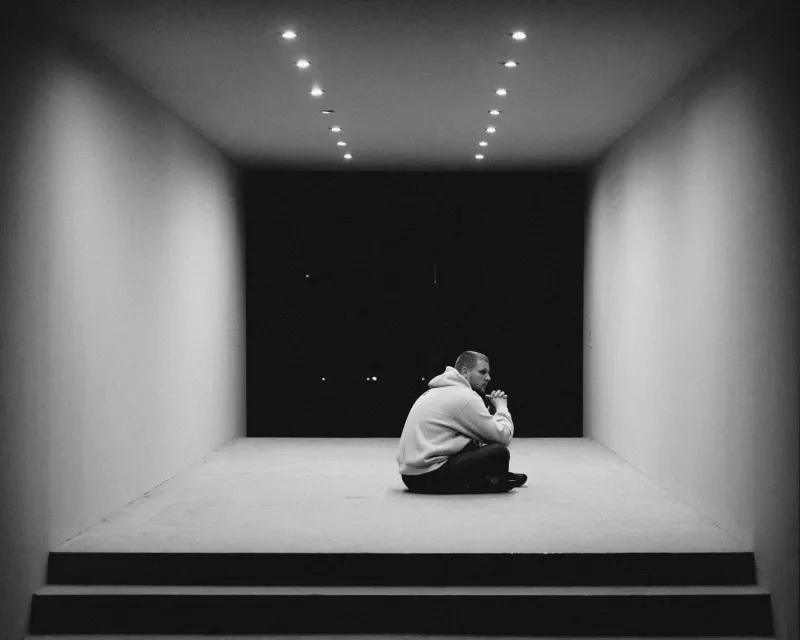
Somewhere around the third minute of sitting on your couch without a screen, a podcast, a snack, or a purpose, something uncomfortable surfaces. It's not boredom exactly. It's closer to accusation. A low hum that sounds a lot like: you should be doing something.
That feeling has a name. It doesn't have a clean clinical label, but culturally we might call it productivity guilt — the ambient shame that settles in whenever you're not visibly, measurably moving forward. It's the reason people check email on vacation, answer Slack on Sunday mornings, and describe watching a movie as "finally letting myself relax," as if relaxation were something that had to be earned through prior suffering.
This is not a personality quirk. It's infrastructure. And most of us built it without realizing we were doing construction.
The American Mythology of Busy
The United States has a particular relationship with idleness. Culturally, we inherited a Puritan suspicion of rest — the idea that stillness is morally suspect, that a person's value correlates directly with their output. That framework got absorbed into capitalism with remarkable efficiency. Hustle culture didn't invent the problem; it just gave it a LinkedIn profile.
The result is a country where people brag about being busy the way previous generations bragged about being thrifty. Where "I've been slammed" functions as a greeting. Where doing nothing — not meditating, not journaling, not "unplugging with intention" — just genuinely sitting in a room and staring at the middle distance, is treated as either a luxury or a warning sign.
And so we fill. We fill every gap. Waiting rooms, commutes, lunch breaks, the thirty seconds before a meeting starts. We fill them with content, with tasks, with the performance of productivity. The void is treated like a problem to solve rather than a space to inhabit.
What Actually Happens When You Stop
Here's what the research keeps turning up, even if it doesn't make it onto motivational posters: the brain doesn't go offline when you stop giving it tasks. It shifts into a different mode — what neuroscientists call the default mode network — which is associated with memory consolidation, creative connection, emotional processing, and self-reflection. In other words, the stuff that makes you a functional, coherent human being.
When you never let that system run, things get brittle. Creativity dries up. Emotional regulation gets harder. The sense that you know who you are and what you actually want starts to fuzz at the edges. You stay productive in the narrow, output-measurable sense while quietly losing the thread of your own interior life.
Doing nothing, it turns out, is doing something. It's just doing something that doesn't show up on a dashboard.
The Difference Between Stillness and Shutdown
It's worth drawing a line here, because not all inactivity is the same.
There's the kind of doing-nothing that comes from avoidance — scrolling for four hours to escape a difficult conversation you haven't had, lying in bed past noon because getting up feels impossible, numbing out because the alternative is feeling something you'd rather not feel. That's not rest. That's retreat. It doesn't restore anything; it just delays the reckoning.
And then there's genuine stillness. The kind where you sit with yourself without an agenda. Where you let your mind wander without immediately harvesting the wandering for content or insight. Where you're present in a room without trying to optimize the experience of being present in a room.
The distinction matters because one of the ways productivity guilt defends itself is by collapsing these two categories together. If all idleness is avoidance, then all rest is suspect. And that's a very convenient story if you want to keep running.
Building Permission Structures (Without Turning Rest Into a Task)
Here's the uncomfortable irony: telling someone to schedule downtime, to block off "white space" in their calendar, to treat rest like a productivity tool — all of that still operates within the same logic it's trying to disrupt. You're still justifying the nothing by making it useful.
So this isn't a prescription. But there are a few shifts in framing that seem to make stillness more accessible for people who've been trained out of it.
Stop treating rest as a reward. The structure of "I'll relax after I finish X" guarantees that rest always arrives in debt, always feels slightly stolen. Rest isn't compensation for effort. It's part of the cycle that makes effort possible.
Notice the guilt without obeying it. That low-hum accusation — you should be doing something — doesn't have to be a command. You can observe it the way you'd observe a car alarm going off outside. Loud, insistent, ultimately not your emergency.
Let nothing be nothing. This is the hardest one. The temptation is to retrofit meaning onto stillness — to frame it as mindfulness, as self-care, as a productivity hack. All of that is fine if it helps. But at some point the practice is just sitting in a room, being a person, not producing anything, and letting that be enough.
The Void as a Legitimate Address
Only Zero, as a name, points at something real. Zero isn't failure. It's origin. It's the baseline from which everything else departs. Without zero, numbers don't mean anything. Without silence, sound is just noise.
The same logic applies to the rhythms of a life. Without genuine emptiness — not scheduled emptiness, not productive emptiness, just actual unstructured nothing — everything else gets louder without getting clearer. The signal drowns in its own frequency.
Learning to do nothing without guilt isn't a lifestyle upgrade. It's closer to remembering something you knew before anyone told you that knowing it was a problem. Kids do nothing constantly. They stare out car windows. They sit in the grass. They exist without justifying the existence.
At some point, most of us got trained out of that. The good news — if that's the right word — is that nobody can take it from you permanently. The capacity for stillness doesn't disappear. It just waits, quietly, in the space between everything you're doing.
Which is, when you think about it, exactly where you'd expect to find it.