We Saved Everything and Remembered Nothing
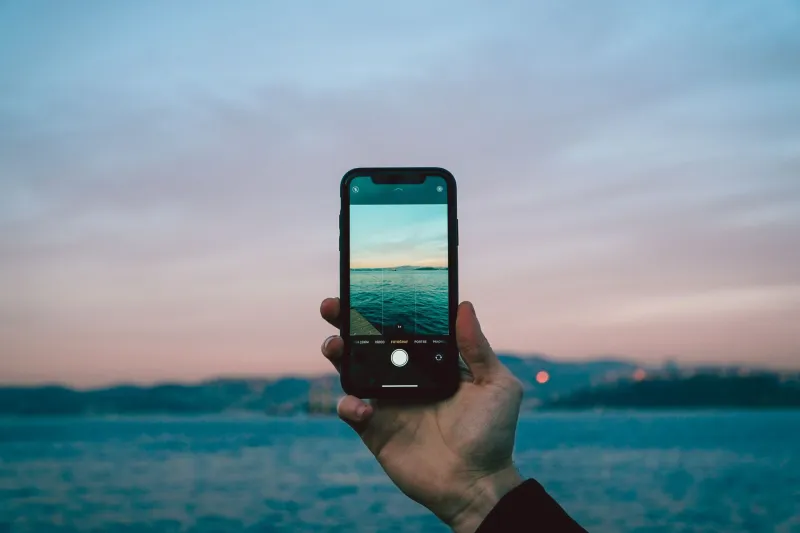
There's a specific kind of vertigo that hits when you scroll back far enough in your phone's photo library. Not nostalgia exactly — something stranger. The images are all there, timestamped and geotagged with clinical precision. A brunch from 2019. A sunset you apparently found significant. A screenshot of a tweet that no longer exists from an account that has since been deleted. The record is meticulous. The feeling is almost nothing.
You remember saving these things. You don't remember living them.
This is digital amnesia — not the forgetting of information, but the forgetting of experience that happens because we've outsourced the act of remembering to our devices.
The Neuroscience of Letting Go
Human memory was never designed to be a hard drive. It's a living, reconstructive process — every time you recall something, you're not retrieving a file, you're rebuilding it. The neuroscientist Karim Nader demonstrated in the early 2000s that memories are actually reconsolidated each time we access them, meaning they shift and evolve with us. We don't just remember the past. We rewrite it, continuously, in the context of who we are now.
Forgetting, in this framework, isn't a bug. It's how we change. The details that fade are often the ones that no longer serve the story we're building about ourselves. The emotions that soften are the ones that would otherwise keep us anchored to an earlier version of who we were.
When we photograph, screenshot, and cloud-sync everything, we interrupt this process. We freeze versions of ourselves that might otherwise have been allowed to dissolve. The argument with an ex that you screenshotted and reread for months. The performance review that lives in your email archive. The photos from a friendship that ended badly. The algorithm surfaces these things, and you're back there — not growing through it, just revisiting it, over and over, in perfect resolution.
The Google Effect and the Outsourced Mind
In 2011, psychologist Betsy Sparrow published research in Science that described what she called the Google Effect: when people know they can easily look something up, they're less likely to retain it in the first place. The brain, ever efficient, stops encoding information it knows is stored externally.
This made sense as a finding in 2011. It's a more urgent observation now, when the externally stored information isn't just facts about the world but the texture of your own life. We take photos partly so we don't have to fully inhabit the moment — the phone is doing the remembering, so we're freed from the effort of it. Except what we're freed from isn't effort. It's presence.
A study out of the University of California Santa Cruz found that people who photographed objects in a museum remembered fewer details about those objects than people who just looked at them. The act of capturing redirected cognitive resources away from experience and toward documentation. We were there, technically. The camera was really there.
The Identity Problem
This gets philosophically strange when you extend it beyond individual memories to the question of identity itself.
Who you are is partly a story you tell yourself — a narrative constructed from selected memories, interpreted and reinterpreted over time. The version of you at twenty-two isn't who you are now, and the distance between those two people is made possible, in part, by forgetting. The embarrassing thing you said at a party in 2009. The relationship that felt like the end of the world. The career aspiration that no longer fits. These things faded, and in their fading, made room for you to become someone else.
Digital archives don't fade. They sit there, fully intact, algorithmically resurface on anniversaries, get backed up across three different cloud services. "On this day three years ago" is a feature, not a warning.
The philosopher Paul Ricoeur argued that narrative identity — the self understood as an ongoing story — requires both continuity and change. You need enough memory to be recognizably yourself over time, but enough forgetting to allow for transformation. What happens to that balance when the continuity side becomes absolute? When nothing is allowed to be lost?
You get people who are, in a strange way, haunted by their own data.
What Forgetting Actually Gave Us
There's a reason oral traditions changed over generations. There's a reason diaries were sometimes burned, letters thrown away, photographs lost in moves. The impermanence wasn't just a technical limitation — it was a feature of living in time. Things ended. Periods closed. People got to become new.
The writer Jorge Luis Borges imagined a character named Funes who, after an accident, could forget nothing — every sensation, every moment preserved in perfect detail. Borges described him as "not very capable of thought" because real thinking requires the ability to generalize, to abstract, to let the specific dissolve into the general. Funes couldn't do that. He was buried under the weight of everything he'd ever experienced.
We're building a version of that.
The Case for Intentional Loss
Some people are starting to push back. There are photographers who shoot on film specifically because the scarcity of frames forces them to be present. There are people who delete their camera rolls annually, deliberately, as a practice. There are therapists who recommend not rereading old messages during breakups — not because the information is inaccurate, but because the act of rereading keeps the wound fresh in a way that prevents healing.
None of this is about destroying history. It's about recognizing that the self is not an archive. You are not your data. The things you forget are not always things you've lost — sometimes they're things you've processed, integrated, and released. That's not amnesia. That's growth.
The cloud will hold everything. That doesn't mean you have to carry it.
Some things are worth saving. Most things are worth letting go. The hard part — the genuinely human part — is knowing the difference, and not outsourcing that judgment to an algorithm that has no idea who you're trying to become.