Your Color-Coded Planner Is Not a Personality
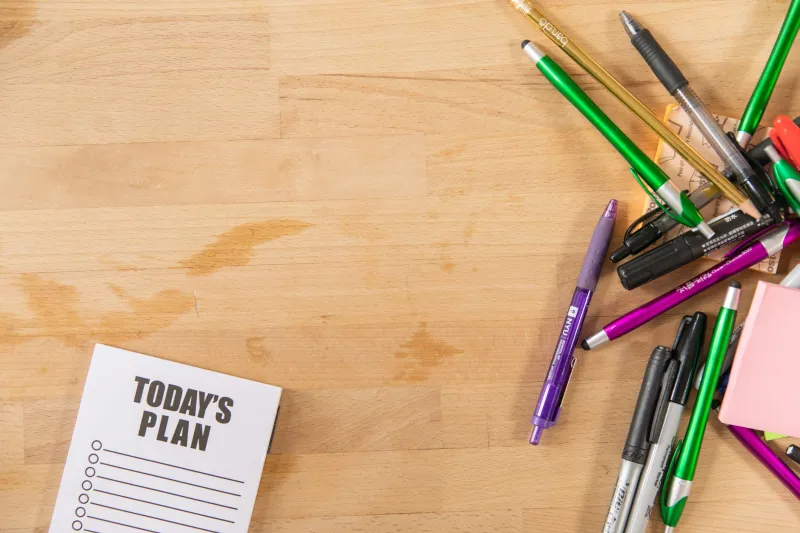
Let's set the scene. It's Sunday afternoon. You have a project due. Instead of working on the project, you spend ninety minutes redesigning your task management system. You research the best font for your new daily planner spread. You watch a forty-minute YouTube video about someone else's morning routine. You create a new folder structure. You build a habit tracker in a spreadsheet that is, objectively, a small work of art.
At the end of the day, the project is exactly where you left it. But you feel like you did something.
That feeling has a name: productivity theater. And it's eating a genuinely alarming amount of American creative and intellectual output.
The System as the Product
Productivity culture in the US has always had a slightly evangelical quality. From Frederick Winslow Taylor's scientific management principles in the early 1900s to the Getting Things Done movement of the early 2000s to the current TikTok ecosystem of "study with me" videos and aesthetic planner hauls — we have long confused the machinery of work with the work itself.
But something shifted in the last decade. The tools got beautiful. Notion, Obsidian, and their various competitors turned personal organization into a genuine design discipline. Bullet journaling became an art form with its own Instagram aesthetic. Habit-tracking apps gamified self-improvement until the tracking became more satisfying than the habit. The optimization layer didn't just support the work — it started competing with it for attention, energy, and identity.
You can now spend an entire weekend building a productivity system so sophisticated that actually using it would almost be beside the point. And plenty of people do.
Meta-Work and the Illusion of Progress
There's a useful distinction between work and meta-work. Work is the thing you're actually trying to produce — the article, the business plan, the creative project, the difficult conversation you need to have. Meta-work is everything you do about the work: planning it, organizing it, tracking it, reviewing your system for tracking it, reading articles about better ways to track it.
Meta-work is not inherently useless. Some planning is necessary. Some reflection is valuable. The problem is that meta-work generates the sensation of productivity without requiring you to actually produce anything. It's cognitively comfortable in a way that real work often isn't. Real work involves uncertainty, the possibility of failure, the exposure of putting something unfinished into the world. Meta-work is just... tidying. And tidying feels great.
Cognitive behavioral therapists have a term for a related pattern: productive procrastination. It's what happens when you clean your entire apartment instead of making a difficult phone call. The cleaning is real. The avoidance is also real. The two coexist perfectly.
Your Notion dashboard is your clean apartment.
The Optimization Industrial Complex
This isn't accidental. There is an entire industry — worth billions of dollars — built around selling you better ways to organize your work. Productivity apps, planners, courses, coaches, YouTube channels, Substack newsletters, and podcast empires all depend on you believing that your current system is insufficient and that the right tool is out there waiting.
The business model requires that you never quite arrive. If you found the perfect system and it worked, you'd stop buying. So the content is structured to keep you in a permanent state of optimization — always refining, always upgrading, always one template away from the version of yourself who actually gets things done.
And it works, partly because there's always a genuine reason to believe the next system might be the one. Maybe this planner is better. Maybe time-blocking would help if you just did it right. The possibility is real enough to keep you subscribed.
Meanwhile, the work waits.
When the Tool Becomes the Trap
Here's a diagnostic question worth sitting with: if you stripped away every productivity tool you currently use — every app, every journal, every template, every tracker — would your actual output change?
For a lot of people, the honest answer is: not much. And for some, output might actually increase, because the cognitive overhead of maintaining the system would be gone.
A tool should reduce friction between you and the thing you're making. When a tool starts creating its own friction — when you have to tend to it, customize it, learn its updates, migrate your data when the company pivots — it has stopped being a tool and started being a second job.
The writer and programmer Paul Graham has written about the difference between "real work" and "fake work" — fake work being the kind that feels productive but doesn't actually move anything forward. His framing is blunt: most people, if they're honest, know the difference. They just prefer the fake version because it's safer.
The Radical Act of Just Starting
None of this is an argument against all planning or all tools. It's an argument against mistaking the container for the contents.
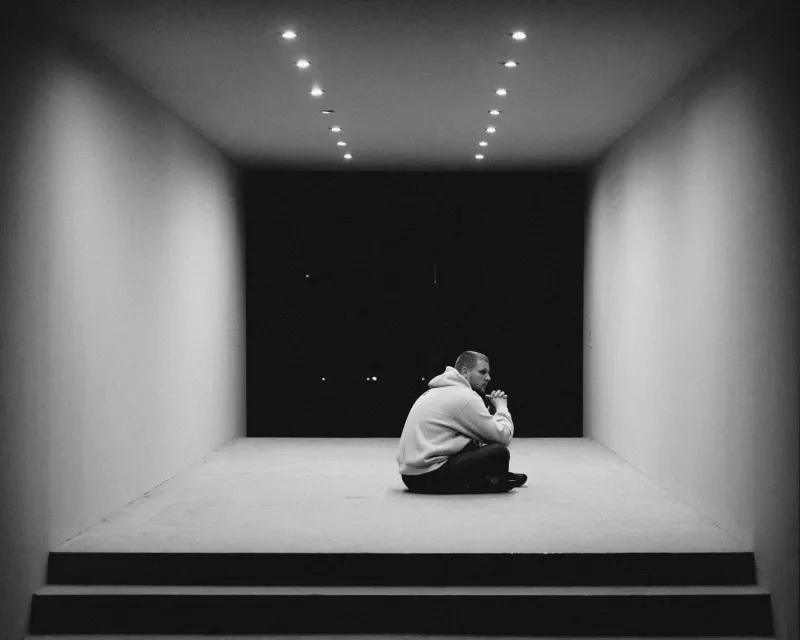
A blank document is uncomfortable. A blank canvas is uncomfortable. An unstructured hour is uncomfortable. That discomfort is not a problem to be solved with a better organizational framework — it's the actual texture of creative work, and the only way through it is through it.
The most productive people aren't usually the most optimized. They're the ones who've made peace with the discomfort of starting and the messiness of process. They use the simplest system that works and then ignore the system while they're actually working. The system serves them. They don't serve the system.
There's something almost countercultural about that right now. In a content environment that rewards the aesthetic of productivity — the flat-lay planner, the satisfying check-mark montage, the morning routine video — actually disappearing into your work and making something doesn't perform very well. It doesn't photograph. It doesn't have a template you can sell.
But it's the only thing that produces anything real.
Your tools should cost you almost nothing in attention. If they're costing you more than that, they're not working for you. You're working for them.
Close the planner. Open the thing you're actually supposed to be making. It doesn't need to be organized first. It just needs to exist.