The Hunger for Something Real: Why We Keep Chasing Intensity in a Numbed-Out World
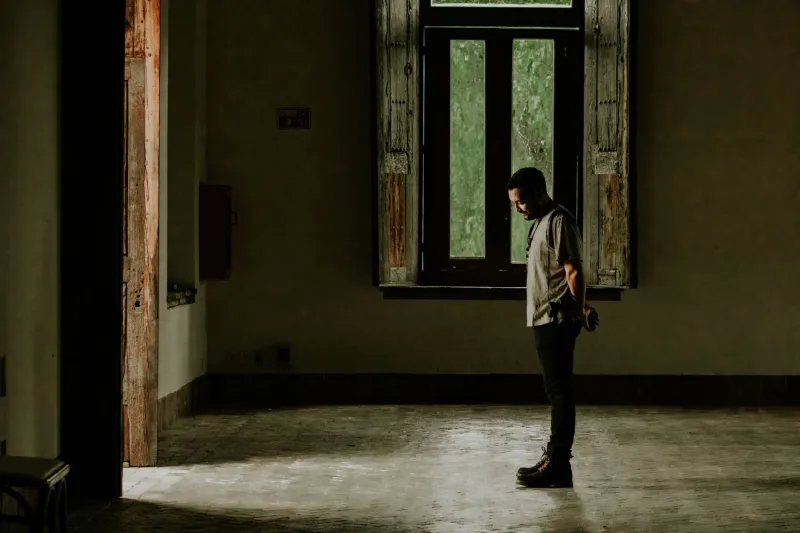
There's a particular kind of restlessness that shows up late at night, when the screen glow is the only light in the room and you've scrolled past the point of actually seeing anything. You're not bored, exactly. You're hungry. But not for food. For something that feels like contact — with an idea, a sensation, a moment that breaks through the fog.
This is one of the defining tensions of contemporary American life: we have more access to more stimulation than any humans in history, and most of us feel profoundly understimulated.
That's not a contradiction. It's a diagnosis.
The Overstimulation Paradox
Here's the thing about constant noise — it doesn't satisfy the hunger. It just raises the threshold. Every notification, every autoplay video, every algorithmically optimized piece of content is engineered to capture attention, not to nourish it. And there's a difference.
Capturing attention is easy. A loud sound does it. A bright flash does it. A provocative image does it. But nourishment — the kind that leaves you feeling like you actually got something — that takes a different kind of engagement entirely.
Psychologists have a term for what happens when stimulation becomes chronic and low-quality: hedonic adaptation. Your baseline shifts upward. What once felt exciting becomes background noise. And so you reach for something louder, faster, more extreme — not because you want more, but because your nervous system has quietly recalibrated what "normal" feels like.
The result is a culture that is simultaneously overstimulated and starving.
What the Body Knows That the Mind Won't Admit
One of the more inconvenient truths of being a person is that desire doesn't negotiate. It doesn't care about your productivity schedule or your values statement or your carefully curated identity. It just shows up, usually at the worst time, and insists on being acknowledged.
Western culture — and American culture in particular — has a complicated relationship with this. We've built entire industries around desire: advertising, entertainment, social media, dating apps. But we've also built an equally powerful set of industries around suppressing, redirecting, and monetizing the discomfort that desire creates when it goes unmet.
The wellness industry tells you to breathe through it. The self-help industry tells you to channel it into productivity. Religion has historically told you to transcend it. And none of these approaches are entirely wrong — but none of them are entirely honest, either.
Because sometimes the most radical thing you can do is simply admit that you want something. Not perform wanting it. Not intellectualize it. Just sit with the raw, unmediated fact of the craving itself.
Intensity Isn't the Problem. Avoidance Is.
There's a version of minimalism — the kind that gets turned into Pinterest boards and capsule wardrobes — that mistakes reduction for peace. If I just have fewer things, fewer commitments, fewer desires, I'll finally feel okay.
But that's not minimalism. That's suppression with better aesthetics.
Real reduction — the kind that actually changes how you move through the world — isn't about eliminating desire. It's about getting honest about which desires are actually yours, and which ones were installed by someone else's agenda.
The craving for intensity is real. The question is whether you're feeding it with something that actually satisfies, or just reaching for the nearest high-stimulation substitute because it's there and it's easy and it briefly makes the hunger go away.
Those are very different things.
The Case for Sitting With the Want
Here's an experiment worth trying: the next time you feel that late-night restlessness, that low-grade hunger for something you can't quite name — don't immediately reach for your phone. Don't open a new tab. Don't queue up another episode.
Just sit with it for a minute.
Not to punish yourself. Not to practice some kind of ascetic discipline. Just to actually feel what the wanting feels like, without immediately trying to resolve it.
What you'll probably notice is that the sensation itself is more interesting than the thing you were about to reach for. It has texture. It has direction. It's pointing at something — and if you give it a second, it might actually tell you what.
Sometimes it's connection. Sometimes it's creative expression. Sometimes it's physical movement or rest or a conversation you've been avoiding. Sometimes it really is just that you need a snack and some water and eight hours of sleep.
But you can't hear any of that if you immediately drown it out.
Reclaiming the Signal
Only Zero exists in the space between the noise and the nothing — which is actually where most of the interesting stuff lives. Not in the constant churn of content, and not in some idealized state of pure emptiness, but in the honest, sometimes uncomfortable, often surprising territory between the two.
Desire is a signal. Intensity is information. The hunger you feel for something real isn't a problem to be solved — it's a compass, if you're willing to read it.
The culture will keep trying to intercept that signal and sell you a substitute. That's just the nature of the thing. But every once in a while, you get to choose differently. You get to pause, feel what you actually feel, and ask what it's actually pointing at.
That pause — that tiny gap between the craving and the reach — is where everything interesting begins.
Start there.