The $4,000 Empty Room: How Minimalism Learned to Sell Itself
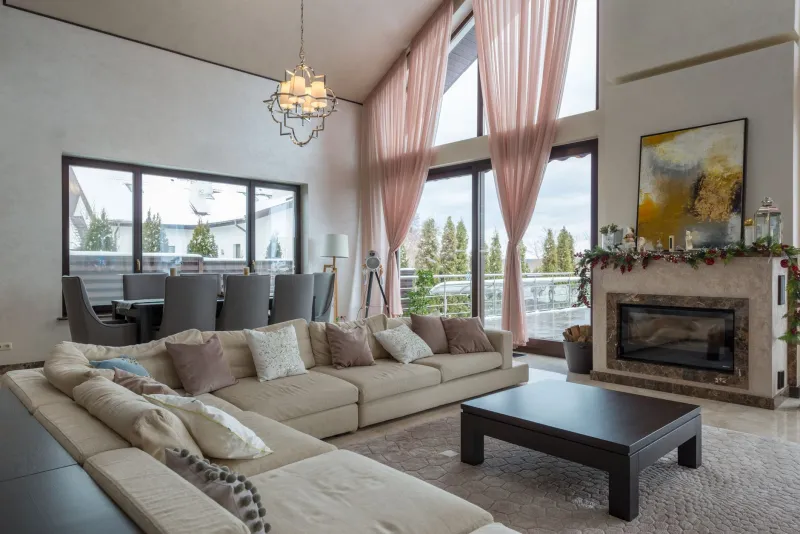
There is a specific type of apartment that appears in aspirational content so frequently it has become its own visual language. White walls. One large plant. A couch in a neutral that has a name like warm stone or fog. A coffee table that costs more than a car payment, notable primarily for what isn't on it. The whole composition communicates restraint, intention, clarity. It communicates, above all, that the person who lives here has transcended the noise.
It also communicates that they spent a lot of money getting there.
This is the central irony of the minimalism movement as it exists today in American culture: it became a consumption identity. A brand. A way to spend, just with better lighting and fewer patterns.
Where the Philosophy Started
The ideas that fed into what we now call minimalism didn't originate in home décor. They came from philosophy, from Zen practice, from Thoreau's cabin and Diogenes' barrel and a long tradition of thinkers who argued that the accumulation of things was an obstacle to clarity rather than an expression of success.
In its early American cultural moment—roughly the early 2010s—the minimalism movement carried some of that original charge. The blogs were earnest. People were genuinely asking what they could remove from their lives, not what they could replace their existing stuff with. The 100 Things Challenge was a real thing people attempted. The KonMari method, whatever its limitations, was asking people to hold objects and feel something honest about whether they wanted to keep them.
The question being asked was: what can I let go of?
That question didn't survive the Instagram era intact.
The Commodification of Empty Space
Somewhere in the mid-2010s, minimalism became a visual aesthetic before it finished being a philosophy. And once it became a visual aesthetic, it became a market.
The problem with empty space, from a retail perspective, is that you can't sell it directly. But you can sell the right objects to put in that space. Premium objects. Objects that don't look like clutter because they're made from natural materials and designed by someone Scandinavian. Objects that signal that you've edited your life down to only the essentials—and that your essentials are expensive.
Whole brands were built on this premise. The minimalist aesthetic became a premium tier. You weren't buying more stuff. You were buying considered stuff. Intentional stuff. The word intentional did a lot of heavy lifting in this era, functioning as a moral cleanser that made consumption feel like philosophy.
A $600 concrete candle holder isn't clutter. It's an object you chose with intention. The distinction is real in some cases and completely constructed in others, and the market has no interest in helping you figure out which is which.
The Gatekeeping Follows the Money
As minimalism became a premium identity, it also became exclusive in ways its philosophical roots never intended. The implicit message of a lot of minimalist content is that you need to start with enough money to buy the right things before you can achieve the right emptiness. Thrift store finds and mismatched furniture don't read as minimalist—they read as poor. The aesthetic requires a baseline investment to enter.
This produced a strange inversion. The original minimalist impulse was democratic. You didn't need resources to own less. You needed resources to own more. The commodified version reversed this entirely. Now the look of owning less required significant spending. The philosophy became a class marker wearing philosophy's clothes.
The people most naturally living with constraint—not because they read a book about it but because that's what their budget allows—were never part of the conversation. Their restraint was invisible because it couldn't be photographed in a way that looked aspirational.
What Restraint Looks Like When It Can't Be Branded
Genuine restraint is, almost by definition, hard to photograph. It doesn't have a consistent visual signature. It might look like a cluttered apartment where nothing new has been bought in three years. It might look like using the same phone until it physically stops working. It might look like a wardrobe that's neither capsule nor curated, just old and functional and not thought about very much.
It might look like nothing at all, which is the problem from a content perspective.
The minimalism that actually delivers what the philosophy promised—less cognitive noise, less financial drain, less time spent managing possessions—tends to be invisible. It's the absence of a purchase, which generates no content. It's the decision not to upgrade, which doesn't photograph well. It's a life organized around subtraction that leaves no particular aesthetic trace.
This is the version that Only Zero finds more interesting than the $4,000 empty room. Not because poverty is romantic—it isn't—but because the question what can I remove? is genuinely different from what should I replace this with?
The Honest Version of Less
If you want to strip the commodification out of minimalism and find what's actually useful underneath, the test is pretty simple: does this require you to spend money? If the answer is yes, you're probably doing consumption, not restraint. The philosophy doesn't require a specific aesthetic. It doesn't require Muji or CB2 or any particular brand's version of beige. It requires honest accounting of what you have, what you use, and what you're keeping out of inertia or anxiety or a vague sense that you might need it someday.
That accounting is free. It's also uncomfortable in ways that buying a nice lamp is not, which is probably why the market version won.
The empty room that actually means something isn't the one with the $3,000 sofa and the single architectural plant. It's the one where you looked at everything you owned and made a genuine decision about each of it. That process leaves no particular visual residue. It doesn't photograph. It doesn't scale into a brand.
It's just quieter. Which was the whole point to begin with.