Write Garbage First: The Surprisingly Liberating Logic of the Zero Draft
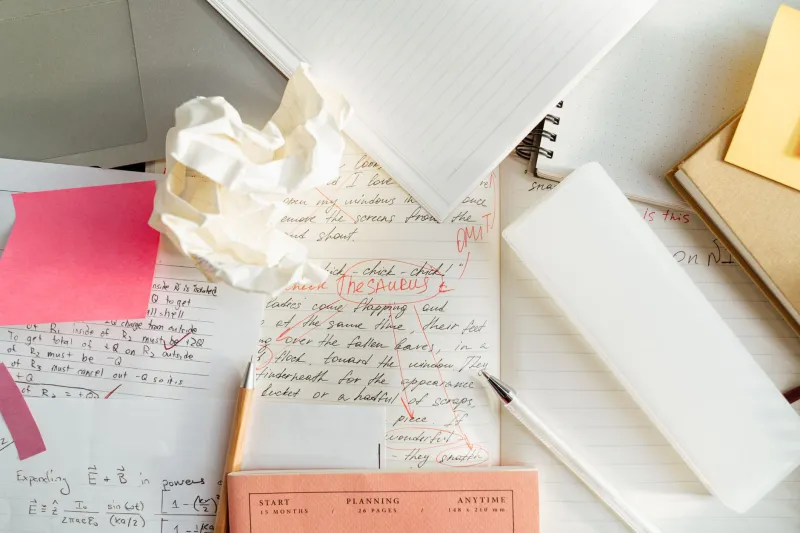
There's a version of your writing that nobody sees. It happens before the careful sentence construction, before you start second-guessing your word choices, before you imagine some invisible reader peering over your shoulder with a red pen. It's the stuff you type fast, cringe at immediately, and usually trash within minutes.
That thing you just deleted? That might have been the most honest thing you wrote all week.
The zero draft — a term that's been floating around writing communities for years — is exactly what it sounds like: the draft that comes before draft one. No rules. No audience. No editing allowed. Just raw, unfiltered output that you produce with the explicit understanding that it is allowed to be completely terrible. The entire point is to lower the stakes to absolute zero so that something true can finally crawl out.
The Performance Problem
Here's the thing about writing: the moment you imagine someone reading it, you start performing. It's almost involuntary. You reach for a smarter word. You hedge a controversial opinion. You smooth out the weird, lurching rhythm of how you actually think and replace it with something that sounds more like a person who has their life together.
This isn't vanity, exactly. It's more like a social reflex that kicks in whether you're writing a novel or a grocery list. We're wired to present, not just express. And that instinct — useful as it is in most of life — is genuinely destructive when you're trying to figure out what you actually think about something.
Polished prose is a translation. The zero draft is the original language.
Novelist Anne Lamott popularized a version of this idea in her book Bird by Bird with her famous defense of what she called "shitty first drafts" — the argument that all good writers start by giving themselves permission to write badly. But the zero draft takes that logic one step further. It's not even a first draft. It's pre-draft. It's the stuff that happens before you're officially writing anything at all.
What Journalists Know That the Rest of Us Forget
Working journalists, especially those on deadline, develop a version of this out of pure survival. When you have forty-five minutes to file eight hundred words, you don't have time to perform. You type. You get the ideas out in whatever shape they arrive. The cleaning up happens later, fast and focused, because you already know what you're trying to say.
Many reporters describe their roughest pre-draft notes — the ones that never make it into any official document — as the place where their actual argument lives. The lede they end up using is often sitting in those early chaotic notes, half-formed, surrounded by sentence fragments and contradictions. The polished version is just that messy insight wearing better clothes.
For everyday writers — the journalers, the bloggers, the people who write long emails and then delete them — the same dynamic plays out constantly. The first three paragraphs of any piece are usually warm-up. The real idea shows up somewhere around paragraph four, when you've stopped trying so hard. The zero draft is just a way of engineering that moment earlier in the process.
Giving Yourself Full Permission to Produce Nothing
The philosophical core of the zero draft is actually kind of radical: you have to genuinely believe, going in, that what you're about to write has zero value. Not "rough value" or "potential value." Zero. You're producing something worthless on purpose, and that's the whole point.
This is harder than it sounds. Most of us have been trained since grade school to treat everything we write as a product — something that will be graded, evaluated, or at minimum read by someone who will form an opinion of us based on it. Unlearning that is genuinely difficult. The zero draft asks you to write like no one will ever see it, including future you.
Some writers use specific rituals to reinforce this. They write in a different document, one they label "junk" or "scratch" or just leave untitled. Some write by hand specifically because handwriting feels less permanent, less official. Others set a timer — ten or fifteen minutes — and treat the whole session as a throwaway exercise, the way an athlete warms up before the actual event.
The goal is to create enough psychological distance between the zero draft and "real" writing that the internal editor goes quiet. That editor isn't your enemy, by the way. It's actually pretty useful once you have something worth editing. The problem is when it shows up before you even know what you're trying to say.
The Ideas That Only Show Up When You Stop Trying
There's a specific kind of idea that only emerges in the zero draft. It's the one you'd never let yourself write if you were being careful — the opinion that feels too obvious, or too weird, or too personal, or too incomplete. The zero draft is where those ideas surface, because the conditions are finally safe enough for them to.
Long-time journalers talk about this constantly. The entry they wrote in five minutes at midnight, half asleep, with terrible spelling and no punctuation — that's the one they come back to. That's the one that actually said something. The carefully composed entry from the following morning, the one where they thought about what they were doing, reads like a press release by comparison.
This is what the zero draft is really about. Not bad writing as a stepping stone to good writing, though it can be that too. It's about the specific clarity that only shows up when you've stripped away the performance entirely. When you're writing for no one, not even yourself, something honest tends to fill the space.
The Void Is the Starting Point
There's something almost meditative about writing with the explicit goal of producing nothing worth keeping. It removes the outcome from the equation entirely. You're not building toward a finished piece. You're not trying to impress anyone. You're just thinking out loud in a space where the usual rules don't apply.
From nothing, weirdly, something tends to emerge.
The zero draft won't save every piece of writing. Some ideas really are dead ends, and no amount of permission to be terrible will resurrect them. But for the ideas that are alive — the ones that are just buried under self-consciousness and performance anxiety — the zero draft is often the only shovel that works.
Write the garbage version first. Write it badly and fast and without looking back. Give it zero audience, zero stakes, zero expectations.
Then see what's actually in there.